
Tree Disposition Plans
for Land Development Projects
What Is a Tree Disposition Plan?
Not every jurisdiction requires a formal TDP, and mitigation thresholds vary significantly by municipality, county, and state. Evergreen Design Group has worked in over 40 states since 2005 and understands how to navigate these varying regulations efficiently on behalf of our clients. A comprehensive Tree Disposition Plan combines technical expertise with regulatory knowledge. Many municipalities require a Tree Disposition Plan as part of the permitting process.
What Is a Tree Survey?
A tree survey is the foundation of any tree disposition plan. It is a formal inventory of the existing protected trees on a development site, documenting each tree’s location, species, size (DBH), and overall health condition. Tree inventories are a critical part of the process, providing a detailed assessment of all trees on site to inform planning and preservation strategies.
Tree surveys are typically performed by either a licensed land surveyor or a certified arborist, and often both are involved:
Land Surveyor: Provides the most spatially accurate tree locations by tagging and locating trees during the boundary survey. When a surveyor is already mobilized on-site, having them locate and tag trees simultaneously is the most cost-efficient approach.
Certified Arborist: Evaluates and documents each tree’s species, diameter at breast height (DBH), health rating, and structural condition. If a surveyor is not contracted to locate trees, our certified arborists can handle GPS-based location and tagging in a single site visit — avoiding a costly return trip by the surveyor. A detailed resource inventory identifies tree species, locations, tag numbers, size classes, and overall health to determine the current state of the forest.
At Evergreen Design Group, we coordinate directly with the land surveyor and dispatch our certified arborist to complete the inventory, providing a seamless, single-source process for our clients.
Tree surveys are necessary for compliance with state and local tree conservation laws.
Tree Disposition Plan Requirements by Jurisdiction
One of the most common questions we receive from architects, civil engineers, and land developers is: “Does my project require a tree disposition plan?”
The answer depends entirely on the local authority having jurisdiction (AHJ). Requirements vary widely:
- Some municipalities require a TDP as part of the site plan or grading permit application.
- Some jurisdictions only regulate trees above a certain trunk diameter (e.g., 6” DBH or larger).
- Some require mitigation only for specific species designated as “protected” or “heritage” trees.
- Others require mitigation for any tree removal within a defined canopy coverage ratio.
Tree disposition plans must be submitted to the relevant authorities, such as Urban Forestry, for review and approval before any construction or preservation activities can proceed.
Failure to submit a compliant TDP — or submitting one that doesn’t meet local standards — can result in permit delays, resubmittals, and costly project holds. Evergreen Design Group’s experience across 40+ states means we know what different permitting authorities expect and how to deliver it correctly the first time.
The Urban Forest Preservation Act regulates the removal and protection of mature trees on private property.
When mitigation thresholds are triggered, tree removal fees and fines are based on species and diameter, reflecting the value of larger trees.
Our Tree Disposition Planning Process
Evergreen Design Group handles every phase of tree disposition planning, reducing the number of consultants your project team needs to manage.
Effective tree disposition planning requires coordination and communication among all parties involved, including property owners, developers, arborists, surveyors, and civil engineers. Management strategies for tree care, risk management, pest management, and site development are essential to ensure safe, sustainable, and regulatory-compliant outcomes. Clear management goals and objectives should be established to guide long-term outcomes such as forest health improvement, timber production, or wildlife habitat enhancement. Ongoing monitoring provides a mechanism for periodic assessment to track forest health against quantifiable goals and adjust management strategies for climate or pest pressures. Environmental protection is a key objective, minimizing construction impact, preserving existing ecosystems, managing stormwater, and protecting biodiversity.

Phase 1 — Tree Survey and Inventory
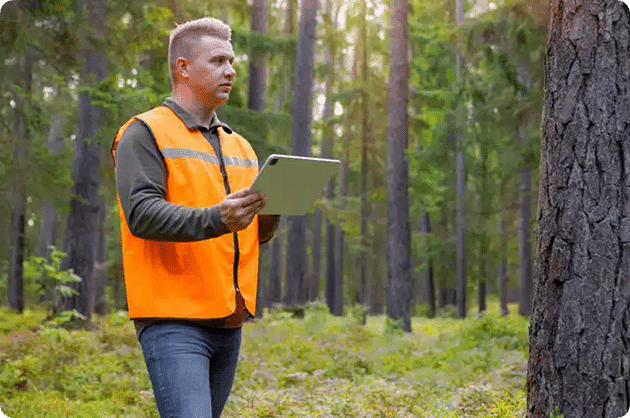
Our certified arborists conduct a field survey of all existing trees on the development site. Each tree is identified, tagged, and documented with the following data:
- Common and botanical species name
- Trunk diameter at breast height (DBH)
- Overall health rating and structural condition
- Location coordinates (GPS or survey-tied)
- Notations on proximity to grading limits, utility corridors, and proposed structures
Shrubs may also included in the inventory and should be considered in site development planning. The location of each tree and shrub is carefully documented to ensure proper planning.
We recommend initiating the tree survey concurrently with the initial land survey to avoid schedule impacts downstream. Early tree data allows civil engineers and architects to incorporate tree constraints into grading plans and site layouts before design is too far advanced to accommodate meaningful changes.
The property owner is responsible for discussing potential impacts to trees located near or on adjacent properties, and tree preservation plans must be presented to property owners for any off-site trees being affected from construction.
Phase 2 — Tree Disposition Plan Preparation
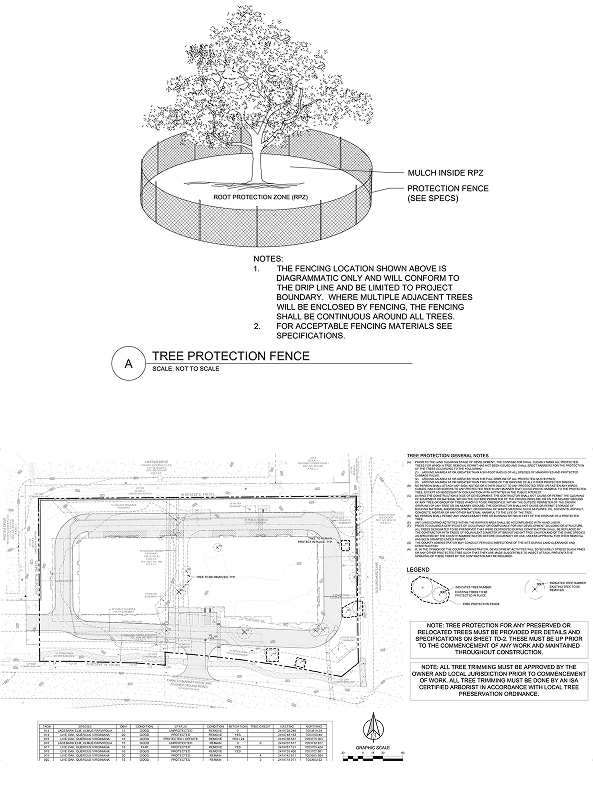
Using the survey data, our landscape architects prepare the tree disposition plan, which delineates:
- Trees to remain: Protected with tree save areas, root zone barriers, construction fencing, and associated notes and specifications.
- Trees to be removed: Identified with species, size, and disposition reason (grading conflict, condition, utility conflict, etc.).
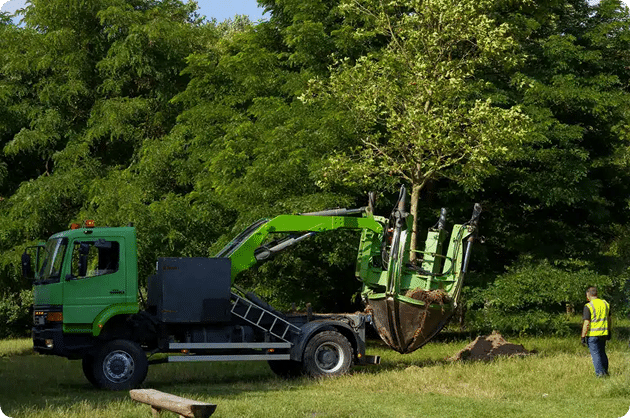
- Applicable mitigation requirements: Calculated in accordance with local ordinance, including replacement caliper inches, species substitutions, or monetary contributions to a tree fund. Mitigation and replanting plans are created to replace removed healthy trees with replacement trees, maintaining canopy goals and biodiversity. Mitigation plans propose measures to offset environmental damage through replanting or relocation to meet local codes, ensuring that removed trees are replaced in line with municipal guidelines.
The plan is drawn to scale and formatted to meet permitting authority submittal requirements. All notes, specifications, details, and calculations are included in a single, coordinated document set.
Phase 3 — Tree Preservation Measures
For trees designated to remain, we prepare a tree preservation plan outlining protective measures during construction, including:
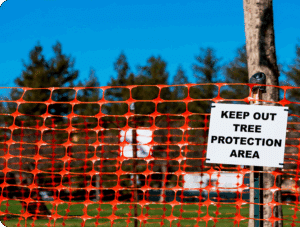
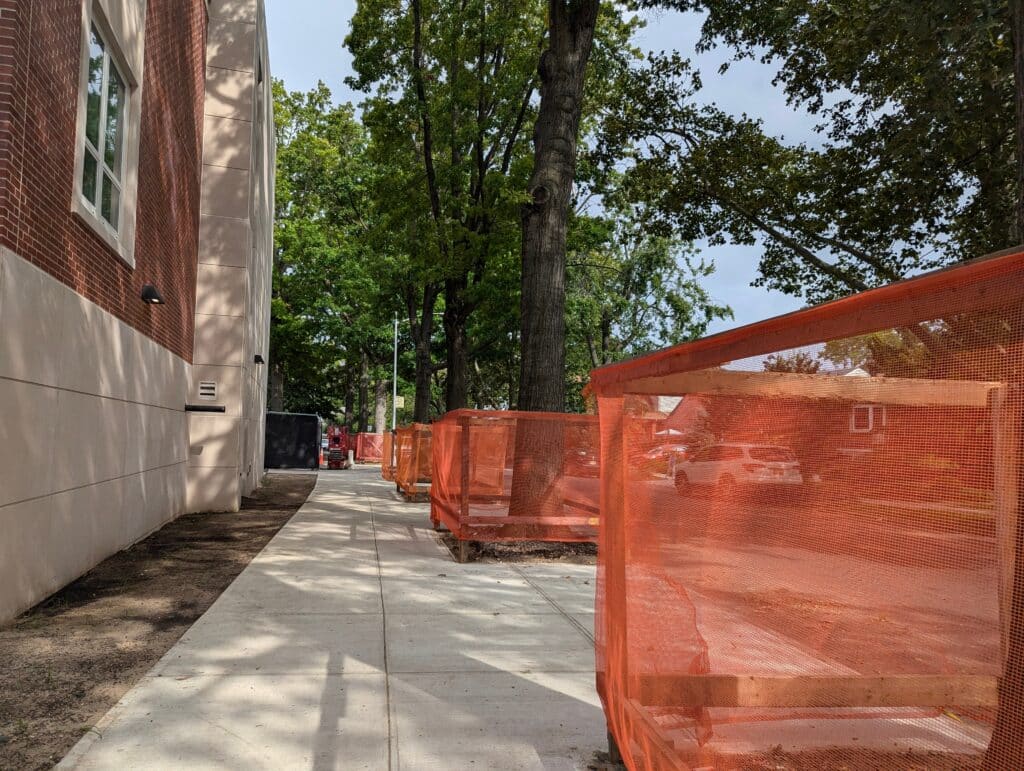
- Tree protection fencing (TPF) layout and specifications. Tree protection fencing must be erected prior to construction to protect the Tree Preservation Area as determined by the project arborist.
- Fencing should be anchored securely in the ground to ensure stability and prevent disturbance.
- Root zone protection requirements. Any roots exposed during excavation should be immediately covered with soil or protective materials to prevent drying out and damage.
- Approved construction methods within the critical root zone (CRZ)
- Monitoring and care protocols during active construction phases. Trees designated to remain are preserved through these protective measures.
Protecting existing trees during construction is both a regulatory requirement and a practical investment — mature trees significantly enhance the aesthetic and economic value of a finished development.
Phase 4 — Tree Mitigation Strategy
When tree removal is unavoidable, we develop a tree mitigation plan that satisfies local ordinance requirements while aligning with your project’s budget and site constraints. Mitigation strategies may include:
- On-site replacement planting at required caliper ratios
- Off-site planting contributions
- Payment into a municipal tree fund or urban forestry program
- A hybrid approach combining planting and fee-in-lieu contributions
Our team will calculate mitigation obligations, identify compliant replacement species, and coordinate with the permitting authority to secure approval efficiently.

Design Optimization and Sustainability
Design optimization and sustainability are at the heart of effective tree preservation and disposition planning. By integrating tree preservation considerations early in the design phase, developers and property owners can create site plans that protect existing trees and minimize disruption to their root systems. This might involve adjusting the location of buildings, access roads, or utilities to avoid critical root zones, or implementing protection measures such as fencing and mulch to shield trees from soil compaction and construction impacts.
A certified arborist can collaborate with the design team to identify opportunities for tree preservation and recommend strategies that align with local regulations and permitting requirements. These protection measures not only help maintain the health and longevity of existing trees but also contribute to the overall sustainability of the site. Preserving mature trees adds significant value to a property, enhances biodiversity, and supports the local ecosystem. By prioritizing tree preservation and sustainable practices, developers can create distinctive, environmentally responsible landscapes that meet regulatory standards and appeal to future occupants. This proactive approach streamlines the permitting process, reduces the risk of costly delays, and ensures that the landscape remains an asset long after construction is complete.
Why Architects, Engineers, and Land Developers Choose
Evergreen Design Group

20+ Years of National Experience
Since 2005, Evergreen Design Group has provided landscape architecture and land planning services to developers, civil engineers, architects, and design-build contractors on projects across the country. Our licensed landscape architects are registered in more than 40 states, giving us the ability to deliver consistent, compliant deliverables regardless of project location.

Single-Source Efficiency
Managing multiple consultants for tree surveys, arborist reports, and disposition plans adds cost and coordination burden to your project team. Evergreen Design Group delivers the entire TDP scope — tree survey coordination, arborist assessment, plan preparation, and mitigation strategy — through a single point of contact. This reduces your administrative overhead, compresses your schedule, and ensures all deliverables are internally coordinated before submittal.

Regulatory Fluency Across 40+ States
Tree ordinances vary dramatically from state to state, county to county, and municipality to municipality. Our team stays current on local tree regulations in the jurisdictions where we work, which means fewer surprises during permitting and fewer resubmittals.

Coordinated with Your Project Team
We work directly alongside civil engineers, architects, and project managers — not around them. Our team integrates tree survey data into the design process early, so that grading plans, utility layouts, and site footprints can account for protected trees before conflicts become expensive problems.
Frequently Asked Questions — Tree Disposition Plans
No. Requirements vary by jurisdiction. Some municipalities require a TDP for any project disturbing land with protected trees; others only require one for projects above a certain acreage or disturbance threshold. Our team will research local requirements for your specific site.
As early as possible — ideally concurrent with the boundary and topographic survey. Tree locations and conditions directly influence grading design, utility layout, and site plan configuration. Early data prevents costly design revisions later.
This varies by jurisdiction. Common criteria include minimum trunk diameter (e.g., 6” DBH), designated species (live oak, bald cypress, etc.), heritage or landmark tree designations, or trees within a defined canopy coverage zone. We research local definitions for every project.
Typically both. The land surveyor provides precise spatial coordinates; the certified arborist provides species, size, and condition data. We coordinate both disciplines and, in many cases, our arborists can handle location and tagging to avoid additional surveyor mobilization costs.
Yes. Our landscape architects are currently licensed in more than 40 states. Contact us to confirm coverage for your specific project location.
Yes, landscaping projects frequently require a professional tree survey or disposition plan before work begins. This ensures that both aesthetic improvements and functional land development are performed in compliance with local codes, and that valued or protected trees are properly evaluated and preserved.
Ongoing maintenance is critical for the long-term health and preservation of trees. Regular upkeep and professional oversight help ensure that trees remain healthy, safe, and compliant with local regulations, supporting effective arboriculture practices.
Certified arborists should be involved in developing and implementing Tree Preservation Plans to ensure compliance with local regulations and best practices for tree health and safety.
Identifying hazardous or unhealthy trees early helps mitigate potential liabilities and ensures that risks to people and property are addressed before construction or landscaping begins.
Selective removal criteria are used to identify ‘cull’ trees—those that are diseased, dying, or of poor quality—for removal. This process makes room for more vigorous ‘crop’ trees, supporting a healthier and more sustainable landscape.
Get Started on Your Tree Disposition Plan
If your project involves land development on a site with existing trees, Evergreen Design Group can help you meet regulatory requirements, protect valuable trees, and keep your project moving on schedule.
We work with architects, civil engineers, land developers, and design-build contractors on projects of all scales — from single-parcel infill sites to large master-planned communities.
Contact Evergreen Design Group to discuss your project and request a proposal.
Get in Touch with Us
Interested in transforming your outdoor space? Fill out the form below, and our team will get back to you soon.