
Landscape Architects Tennessee
Tennessee Landscape Architecture for Developers, Engineers, and Architects
Evergreen Design Group is a licensed landscape architecture firm serving land developers, civil engineers, architects, and design-build contractors across Tennessee. Since 2005, we have delivered land planning, planting design, hardscape design, and irrigation design on residential communities, mixed-use developments, commercial projects, and industrial sites — statewide.
We don’t work with homeowners. Our practice is built around B2B project delivery: coordinating with project teams, meeting submittal deadlines, navigating Tennessee’s regulatory environment, and producing construction-ready documents that move your project forward.
Whether your project is in Nashville, Memphis, Knoxville, Chattanooga, or a fast-growing suburban corridor in between, we bring the local knowledge and national resources to get it done right.
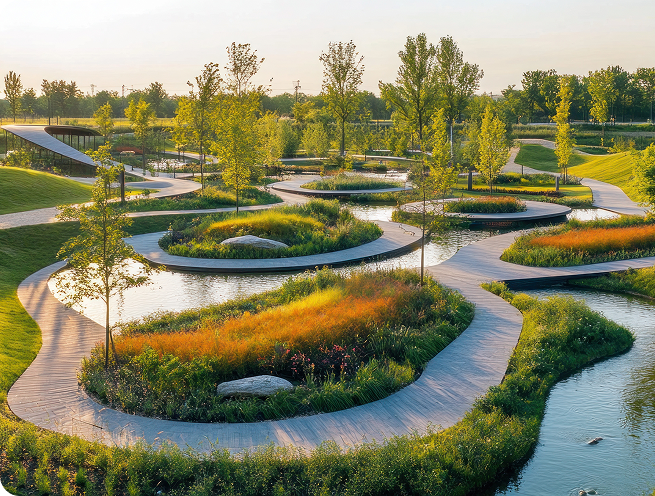
Landscape Architecture Services We Deliver in Tennessee
Every service is performed in-house by our licensed professionals with no subcontracting of scope.

Our land planning service supports the earliest and most critical phases of your development project. We work alongside civil engineers and developers to establish open space frameworks, land use relationships, buffers, amenity placement, and phasing strategies that satisfy both municipal requirements and market expectations. In Tennessee, where development pressures are intense in markets like Williamson County, Hamilton County, and the Knoxville metro, having a landscape architect engaged in the planning phase — not just the design phase — makes a measurable difference in entitlement outcomes.

Tennessee’s ecological diversity demands a thoughtful approach to plant selection. East Tennessee’s Appalachian foothills operate in a different climate zone than the Cumberland Plateau, which differs again from Middle Tennessee’s rolling limestone terrain and West Tennessee’s lowland river deltas. Our licensed landscape architects select species appropriate to each region — considering soil chemistry, frost exposure, drought tolerance, and long-term maintenance loads — then document planting plans to the standard required for permitting and contractor bidding.

Tennessee municipalities and county governments increasingly require tree preservation, mitigation, and replacement documentation as a condition of development approval. Our tree disposition plans identify existing trees, assess preservation feasibility, designate protection zones, and document required replacement ratios — keeping your project on schedule through the permitting process.

Amenity packages — pools, clubhouses, fitness stations, dog parks, and multi-use lawns — directly affect absorption rates and lot premiums on residential communities. Evergreen Design Group designs amenity areas that are both visually compelling and operationally practical. We understand the cost-per-door math that developers track, and we design amenity packages that hit the target.

From entrance features and pedestrian plazas to pool decks, retaining walls, and amenity pavilions, our hardscape designs are engineered for Tennessee’s freeze-thaw cycles, clay-rich soils, and high-precipitation climate. We produce detailed construction documents — materials specifications, grading and drainage coordination, detail sheets — that your contractor can price and build from without ambiguity.

Poorly designed irrigation systems are one of the most common sources of maintenance failures and HOA complaints on Tennessee residential communities. Our irrigation designers produce hydraulically engineered systems — zoned by exposure and plant type, coordinated with local water pressure data, and compliant with applicable municipal backflow and water efficiency requirements. We document systems to a level that allows competitive bidding and future system maintenance.
What Landscape Architects Need to Know About Designing in Tennessee
Regulatory Environment — TDEC and Municipal Stormwater
Tennessee Department of Environment and Conservation (TDEC) standards govern stormwater quality for most development projects over one acre. Landscape architects play a direct role in stormwater compliance by designing vegetated filter strips, bioswales, buffer planting, and green infrastructure elements that satisfy TDEC permit conditions. Additionally, municipalities like Nashville-Davidson County, City of Memphis, and City of Knoxville each maintain their own stormwater ordinances with distinct detention and water quality requirements. Our team is fluent in these requirements and coordinates directly with civil engineers to ensure landscape elements are properly integrated into SWPPP and drainage documentation.
Climate Diversity Across Tennessee's Three Grand Divisions
Tennessee spans three distinct geographic and climatic regions, each requiring a differentiated design approach:
- East Tennessee (Appalachian Highlands): Elevations ranging from valley floors to mountainous terrain create significant variation in frost dates, wind exposure, and soil moisture. Native plant communities include Appalachian mixed hardwoods, hemlocks, and rhododendrons. Hardscape must account for frost heave and steep topography.
- Middle Tennessee (Central Basin and Highland Rim): Dominated by limestone bedrock, clay-heavy soils, and a humid subtropical climate with hot summers and mild winters. Development pressure is concentrated here — Nashville and its surrounding counties are among the fastest-growing in the nation. Drainage design must account for expansive clay soils and karst features.
- West Tennessee (Coastal Plain): Flat terrain, high water tables, and loamy to sandy soils require different grading strategies and plant palettes than the rest of the state. Flash flooding and riverine flooding are significant design considerations.
Our landscape architects are familiar with all three regions and design accordingly — not from a generic template, but from site-specific conditions.
Soil Variation and Erosion Control
Tennessee's soils are among the most geologically variable in the Southeast. Clay-heavy Davidson soils in Middle Tennessee, shallow rocky substrates in the Ridge and Valley, and alluvial deposits along the Mississippi embayment all present distinct challenges for grading, planting establishment, and long-term erosion control. We select erosion control measures, soil amendment strategies, and plant palettes that match actual site conditions — not generic specifications.
Development Activity and Local Code Knowledge
Tennessee's rapid growth in markets like Williamson County, Knox County, Hamilton County, Rutherford County, and Shelby County creates parallel complexity in local land development codes. Zoning buffers, streetscape requirements, open space set-asides, and tree preservation ordinances vary materially from one jurisdiction to the next. Evergreen Design Group maintains current working knowledge of these requirements, reducing the risk of submittal corrections and resubmission delays on your project.
Tennessee Projects We Support

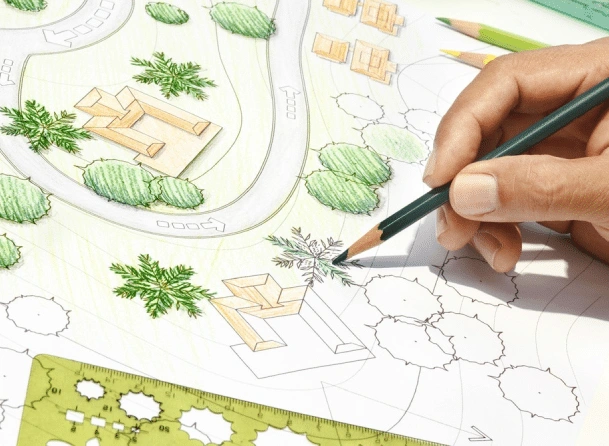
Residential Land Development
Master-planned communities, single-family subdivisions, townhome communities, and mixed-density neighborhoods. We provide land planning, amenity design, planting plans, tree disposition plans, and irrigation design — coordinating with your civil engineer through the full entitlement and construction document process.
Commercial and Mixed-Use Development
Retail centers, office parks, mixed-use corridors, and urban infill projects. We design streetscape plantings, parking lot landscaping, stormwater green infrastructure, and pedestrian environments that satisfy municipal landscape ordinances and create environments people want to be in.
Industrial and Institutional Sites
Distribution centers, manufacturing facilities, healthcare campuses, and institutional developments require durable, low-maintenance landscape solutions designed for large impervious footprints, vehicle circulation, and security-sensitive perimeters. We produce landscape plans that meet site plan approval requirements without over-designing the landscape budget.
Why Tennessee Project Teams Work with Evergreen Design Group
Licensed in Tennessee. Experienced Nationally.
Evergreen Design Group holds an active Tennessee landscape architect license. Our team has delivered projects across more than 40 states, which means we bring national-level experience in entitlement coordination, construction documentation standards, and design-build workflows to every Tennessee engagement.
A Single Point of Contact for All Landscape Scope
Rather than managing multiple consultants for land planning, planting, hardscape, and irrigation, your project team works with one firm. We coordinate internally across disciplines, reducing RFI volume and keeping your schedule intact.
Construction-Ready Documentation
Our deliverables are produced to a standard that contractors can price and build from without excessive clarification. That means fewer change orders, fewer delays, and fewer surprises during construction.
Responsive to Your Schedule
Development timelines move fast in Tennessee’s competitive market. We structure our engagement and communication to keep pace with your project schedule — not slow it down.
Frequently Asked Questions — Landscape Architects Tennessee
We serve clients across all of Tennessee — including Nashville, Memphis, Knoxville, Chattanooga, Murfreesboro, Franklin, Clarksville, and rural and suburban markets statewide. Our clients are typically land developers, civil engineering firms, architects, and design-build contractors, and we are structured to work on projects wherever they are located within the state.
In Tennessee, the title “landscape architect” is a licensed professional designation regulated by the Tennessee Board of Examiners for Landscape Architects. Licensed landscape architects have met education, experience, and examination requirements, and they carry the legal authority to seal and certify landscape construction documents. A landscape designer is not a licensed title and does not carry the same regulatory authorization. For projects requiring permitted construction documents — residential communities, commercial developments, municipal submittals — a licensed landscape architect is required. All Evergreen Design Group projects are managed by or under the direct supervision of licensed landscape architects.
As early as possible — ideally during the land planning and pre-application phase. Engaging a landscape architect at the site planning stage allows open space, buffers, amenity areas, and stormwater features to be integrated into the site layout rather than retrofitted after the civil plan is set. Projects that include landscape architects in the planning phase consistently see fewer submittal corrections, stronger entitlement outcomes, and better construction efficiency than projects that bring landscape architecture in as a late-stage overlay.
Our irrigation designs for Tennessee projects typically include: a hydraulic water demand analysis, a point-of-connection assessment tied to local water pressure data, zone layouts organized by plant type and sun/shade exposure, irrigation head and drip emitter specifications, controller and smart timer specifications, and backflow prevention documentation compliant with local requirements. All designs are produced to a level suitable for contractor bidding and municipal review where required.
Yes — coordination with the civil engineering team is standard practice on every project. Our landscape architects share drawings, discuss stormwater integration, align grading assumptions, and flag conflicts between civil and landscape scope before they reach the construction phase. On projects requiring TDEC compliance or municipal stormwater design review, we coordinate directly with the civil engineer on the placement and sizing of vegetated stormwater features.
Yes. Many Tennessee municipalities and counties require tree surveys, preservation plans, and replacement mitigation as part of site plan approval. Requirements vary by jurisdiction — what Williamson County requires may differ materially from Nashville-Davidson or Knox County. We produce tree disposition plans that document existing trees, identify preservation opportunities, establish protection zones during construction, and calculate replacement obligations per the applicable local ordinance.
Turnaround depends on project scope and complexity, but we structure our process to meet client schedule requirements. During our initial consultation, we discuss your submittal deadlines and permitting milestones and build a delivery schedule around them. We are experienced working in fast-moving development markets where schedule compression is the norm, not the exception.
Contact us through our website or call our office directly. We’ll schedule a brief discovery call to understand your project type, scope, and timeline, and follow up with a proposal. Most clients are developers, civil engineers, architects, or contractors — we are structured to work directly within your project delivery process.
Start Your Tennessee Project with Evergreen Design Group
If you’re planning a development project in Tennessee and need a licensed landscape architecture firm with deep state and regional experience, we’re ready to talk.
We work with land developers, civil engineers, architects, and design-build contractors at every stage — from land planning and entitlement through construction documentation and site observation.
Get in Touch with Us
Interested in transforming your outdoor space? Fill out the form below, and our team will get back to you soon.